Simple Non Toxic Playdough Recipe for Kids Fun Safe and Easy to Make
Homemade playdough has a way of turning an ordinary afternoon into a tiny creative studio. A lump of soft dough becomes a pancake, a dinosaur footprint, a birthday cake, or a family of very wobbly worms.
The best part is that making it at home takes only a few pantry ingredients. This simple non toxic playdough recipe for kids is soft, inexpensive, and easy enough for little helpers to join in. You know exactly what goes into it, and kids get the bonus fun of mixing, coloring, kneading, and creating.
Why homemade non-toxic playdough is a smart choice
Kids explore with their hands, and younger children often explore with their mouths too. That is why the materials used for sensory play matter.
Homemade playdough gives you more control than many store-bought options. You can choose simple ingredients, skip artificial scents if your child is sensitive to them, and avoid mystery additives. It is also easy to make a fresh batch whenever the old one dries out.
Using non-toxic materials for play helps create a calmer, safer experience. Children can squeeze, roll, cut, pinch, and shape without you worrying about harsh ingredients on their skin. It also supports:
Fine motor skills
Kneading, rolling, and pinching build hand strength and coordination.
Creative thinking
Open-ended play lets kids invent their own shapes, stories, and pretend worlds.
Sensory learning
Soft textures, soft colors, and gentle scents can make play more engaging.
Family bonding
Making the dough together is part science activity, part art project, and part snack-time-adjacent kitchen fun.
A quick safety note: this recipe is made with non-toxic kitchen ingredients, but it is not meant to be eaten. The salt content is too high for snacking, so keep an eye on toddlers and supervise play.
Safe, natural ingredients you will need
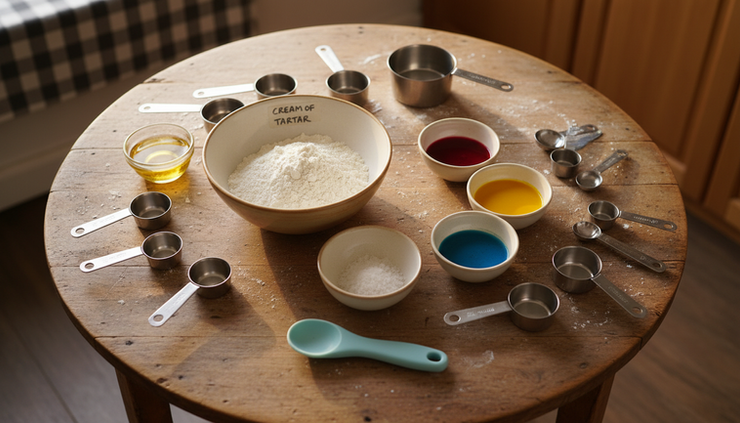
This recipe makes about enough playdough for two to four children, depending on how much each child likes to use.
Ingredients
2 cups all-purpose flour
3/4 cup table salt
2 tablespoons cream of tartar
2 tablespoons olive oil or coconut oil
1 to 1 1/4 cups warm water
Natural food coloring or plant-based coloring
Natural color ideas
You can use store-bought natural food coloring, or try simple pantry options for soft, earthy shades.
Color | Natural option |
Pink | Beet powder or a spoonful of beet juice |
Yellow | Turmeric, used lightly |
Green | Spinach powder or matcha powder |
Purple | Blueberry juice |
Brown | Cocoa powder |
Orange | Paprika or carrot powder |
Use colorful powders sparingly. A little goes a long way, and some ingredients, like turmeric, can stain surfaces and hands.

How to make soft non-toxic playdough
This is a simple stovetop recipe. The gentle heat helps the dough come together quickly and gives it a smooth texture.
Step-by-step instructions
Mix the dry ingredients
Add the flour, salt, and cream of tartar to a medium saucepan. Stir until everything looks evenly combined.
Add the wet ingredients
Pour in the oil and 1 cup of warm water. Stir well. The mixture will look lumpy at first, and that is fine.
Add color
Mix in your food coloring or natural color. If you want several colors, leave the dough plain for now and divide it after cooking.
Cook on low heat
Place the saucepan over low heat. Stir constantly with a sturdy spoon. After a few minutes, the mixture will thicken and pull away from the sides of the pan.
Remove and cool
Once the dough forms a ball, move it onto a plate or clean cutting board. Let it cool until it is safe to touch.
Knead until smooth
Knead the dough for a few minutes. If it feels sticky, sprinkle in a little flour. If it feels dry, add a few drops of oil or water and knead again.
Divide and color, if needed
For multiple colors, split the dough into sections. Knead a different color into each piece. Gloves can help prevent stained fingers, but kids often love the messy part.
Make it more fun with colors, textures, and pretend play
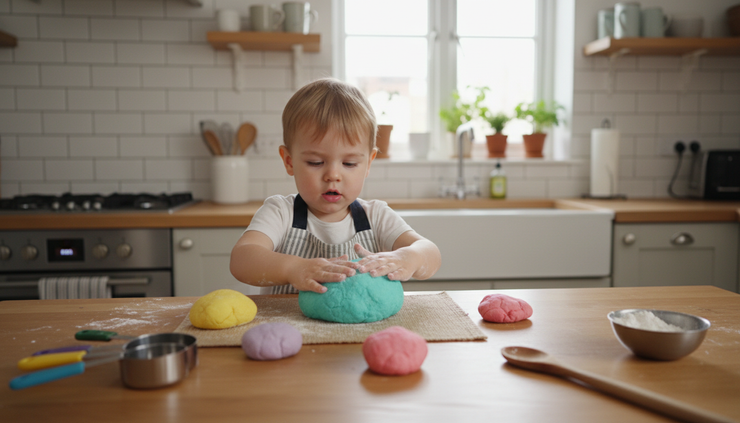
Once the basic recipe is ready, the real fun begins. Small changes can make the same batch feel brand new.
Try these playful variations:
Rainbow dough
Make several small batches in different colors, then twist them together. Kids can make rainbow snakes, swirled cupcakes, or pretend planets.
Calming lavender dough
Add one tiny drop of kid-safe lavender scent or a small pinch of dried lavender. Keep scents mild, especially for younger children.
Cocoa pretend bakery dough
Mix in cocoa powder for a chocolate-brown color. It smells like brownies, so remind kids it is for play only.
Glitter-free sparkle dough
Skip craft glitter if you want an easier cleanup. Try a little mica powder labeled non-toxic and child-safe, or use colorful dough tools instead.
Texture dough
Press dry pasta, buttons, shells, or large beads into the dough for patterns. Use items that are age-appropriate and avoid small pieces with children who still mouth objects.
You can also set up simple play invitations. Put out cookie cutters, a rolling pin, silicone muffin cups, toy animals, or plastic scissors. There is no need to plan a perfect activity. A few tools and a fresh batch of dough are usually enough.
Invite kids into the making process
Making playdough with kids can be just as valuable as playing with it. Even young children can help pour flour, count spoonfuls, choose colors, or squish cooled dough.
Give them small jobs:
Scoop flour into a measuring cup
Stir dry ingredients before the pan goes on the stove
Pick the color for each batch
Knead the cooled dough
Name each color
Help clean the table after play
This turns the recipe into a shared project rather than a parent-only task. Kids feel proud when they play with something they helped create. They also get a gentle introduction to measuring, mixing, patience, and cleanup.

To store your playdough, place each color in an airtight container or zip-top bag. Keep it at room temperature, away from direct sunlight. If it starts to dry out, knead in a few drops of water. If it smells odd or looks moldy, toss it and make a fresh batch.
Homemade non-toxic playdough is simple, safe, and full of possibility. With a few pantry ingredients and a little help from small hands, you can turn mixing and kneading into a sweet family moment, then roll that moment straight into creative play.
Comments