Creative Homeschooling Ideas to Keep Kids Engaged and Learning
Homeschooling can lose its spark when every day starts to feel the same. Even children who love learning may tune out if lessons stay too quiet, too predictable, or too far removed from real life.
The good news is that homeschooling gives families room to make learning flexible, personal, and hands-on. A math lesson can become a store game. A science chapter can turn into a backyard experiment. Reading can lead to a puppet show, a comic strip, or a family debate.
The goal is not to make every moment exciting. It is to create enough variety that children stay curious and see learning as something they can touch, test, explore, and enjoy.
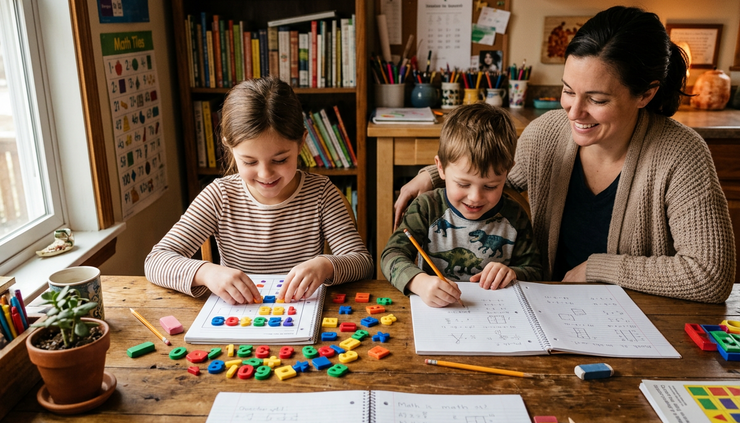
Make lessons interactive from the start
Children often pay closer attention when they have something to do, say, move, or solve. Interactive lessons work because they invite participation instead of asking children to sit still and absorb information for long stretches.
Try turning a basic lesson into a small challenge. If the topic is spelling, hide word cards around the room and have children find, read, and use each word in a sentence. If the topic is history, assign roles and act out a short scene from the time period. If the lesson is about fractions, cut fruit, fold paper, or use measuring cups.
Interactive lessons do not need to be complicated. A few simple changes can make a big difference:
Ask children to predict what will happen before reading or experimenting.
Use questions that have more than one possible answer.
Let children explain a concept back using drawings, blocks, or movement.
Add quick partner or family discussions, even if the “class” has only one child.
For younger children, movement helps. They can hop to the correct answer, toss a beanbag onto a number, or build letters with play dough. Older children may enjoy debates, problem-solving missions, or student-led mini lessons where they teach a sibling or parent.
The best interactive activity is one that makes the child think, not just stay busy. A worksheet with scissors is still a worksheet. A lesson where a child makes choices, tests ideas, and explains their thinking becomes more memorable.

Use hands-on projects that connect subjects
Hands-on projects help children see how subjects work together. A single project can include reading, writing, math, science, art, and problem-solving. This can be especially helpful for children who ask, “When will I ever use this?”
A garden project is a great example. Children can research what grows well in their region, measure a planting area, keep a growth journal, draw plant diagrams, and calculate watering schedules. A simple bird feeder project can lead to lessons about local wildlife, weather, observation, and data collection.
Here are a few project ideas that can fit different ages:
Build a model town Use cardboard, blocks, or recycled materials. Add roads, signs, stores, homes, and a map. Bring in math with scale, writing with town rules, and social studies with community roles.
Create a family newspaper Children can write articles, draw comics, interview relatives, edit headlines, and practice typing. This builds communication skills in a practical way.
Plan a pretend restaurant Make menus, price meals, calculate totals, practice fractions with recipes, and discuss nutrition. Younger children can play cashier while older children manage a budget.
Make a science display Choose a question, run a safe experiment, record observations, and present the results. The presentation can be a poster, video, slideshow, or oral report.
Projects work best when they have a clear finish line. Children feel proud when they can point to something they made, tested, cooked, planted, or presented.
Add educational games for practice that feels fresh
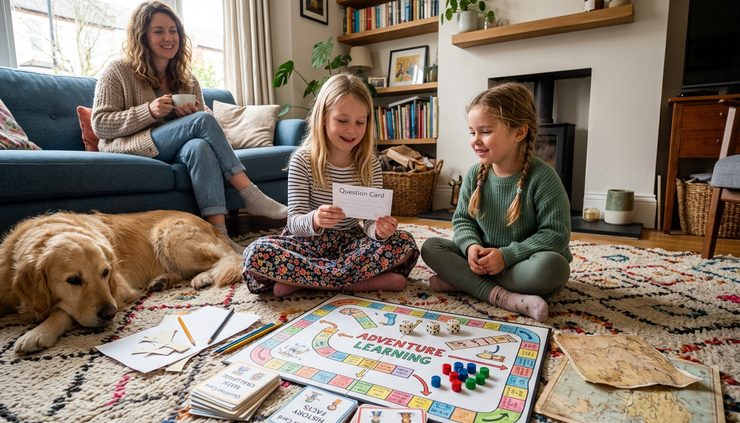
Practice matters, but repetition can become dull. Games make review feel lighter while still building skill. They also give children a reason to keep going after a mistake.
Card games can support math facts, memory, pattern recognition, and strategy. Board games can teach counting, reading, planning, and patience. Word games build vocabulary and spelling. Trivia games can bring science, geography, and history into family time.
You can also make simple games at home:
Math scavenger hunt
Vocabulary charades
History timeline race
Spelling basketball
Find objects shaped like rectangles, cylinders, or spheres. Estimate, measure, and compare.
Act out words from a reading lesson and guess the meaning.
Put event cards in order and explain why each one belongs there.
Spell a word correctly, then take a soft-ball shot into a laundry basket.
Games are especially useful for review days. Instead of adding another worksheet, review the same material through movement, teamwork, or friendly competition.
Keep the tone light. If a game becomes too stressful, adjust the rules. The learning should still be the point, but the experience should feel safe enough for children to try again.
Bring technology and outdoor learning into the week
Technology can add variety when used with purpose. A short documentary clip, virtual museum tour, coding app, audiobook, or interactive map can make a lesson more vivid. The key is to choose tools that support the goal, rather than letting the screen become the whole lesson.
For example, after learning about weather, children can check a weather app, record the forecast, compare it with what happens outside, and graph the results. After studying a country, they can explore a map, listen to traditional music, and cook a simple recipe connected to that place.
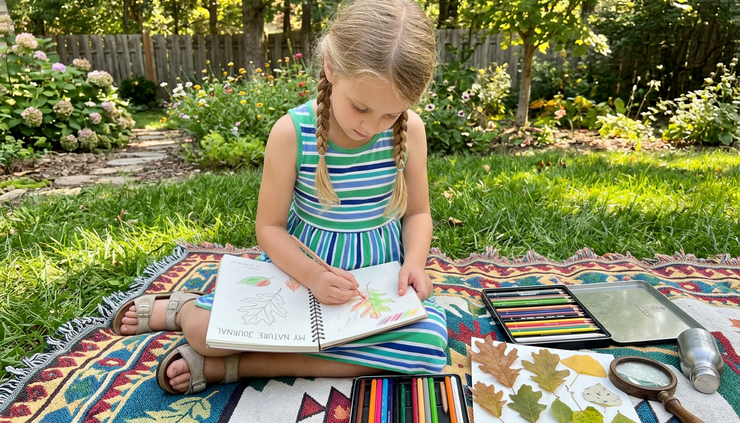
Outdoor learning gives children a different kind of energy. Nature walks can turn into science labs. Sidewalk chalk can become a math board. A park visit can support writing if children describe sounds, textures, and movement.
Try adding one outdoor lesson each week:
Read under a tree and sketch the setting.
Measure shadows at different times of day.
Collect leaves and sort them by shape, size, or color.
Practice multiplication facts while jumping rope.
Write nature poems after a quiet observation walk.
Technology and outdoor learning balance each other well. One helps children access the wider world. The other helps them slow down and notice the world right in front of them.
Personalize learning around real interests
One of the greatest strengths of homeschooling is the freedom to follow a child’s curiosity. Interests can become bridges to harder subjects.
A child who loves animals can practice reading through wildlife books, study habitats, write animal reports, and calculate food needs for a pet. A child who loves sports can learn statistics, anatomy, biographies, and persuasive writing. A child who loves building can explore geometry, design, physics, and measurement.
Personalizing learning does not mean children only study favorite topics. It means interests become entry points. Once attention is captured, it is easier to stretch into new skills.
A simple weekly interest plan can help:
Ask what your child is curious about right now.
Choose one subject to connect to that interest.
Pick one activity, book, video, outing, or project.
Let your child show what they learned in their own way.
Some children like to talk. Some prefer drawing, building, recording audio, or making a slideshow. Offering choices helps children take ownership of learning.
Keep the rhythm simple and flexible
Creative homeschooling does not require a new theme every day or a closet full of supplies. Start small. Add one interactive lesson, one game, one hands-on project, or one outdoor activity each week. Notice what sparks attention, then build from there.
A helpful homeschooling rhythm might include focused seatwork in the morning, a hands-on activity after a break, and reading or games later in the day. Some days will be quiet. Some will be messy. Both can be productive.
When children seem bored, it may be a sign to change the format, not lower the goal. Teach the same concept through movement, art, conversation, building, nature, or technology. With a little creativity, homeschooling can stay engaging while still giving children the steady practice they need to grow.


Comments