Keeping Your Toddler Engaged in Preschool at Home with Fun Learning and Play
A toddler can turn a basket of laundry into a mountain, a cardboard box into a rocket, and a spoon into a drumstick in under five minutes. That same energy can make preschool at home feel joyful, messy, and, on some days, hard to manage.
The good news is that toddlers learn best through play, movement, repetition, and real-life experiences. You do not need a perfect homeschool room or a stack of expensive supplies. A predictable rhythm, a few simple activities, and everyday materials can help your toddler stay engaged while building early skills.
Preschool at home works best when it feels warm and doable. The goal is not to recreate a classroom minute by minute. The goal is to create a home routine where your child can explore letters, numbers, language, social skills, creativity, and independence in ways that fit toddler life.
Build a simple routine that your toddler can predict
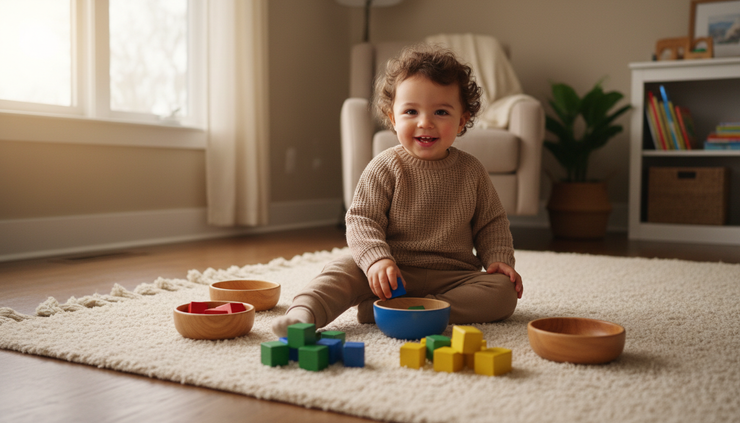
Toddlers feel more settled when they know what comes next. A routine gives the day shape without turning it into a strict schedule. The key is to use short, repeatable blocks of time that match a toddler’s attention span.
A helpful preschool-at-home routine might look like this:
Time of day | Simple activity |
Morning | Breakfast, getting dressed, and a short welcome song |
Mid-morning | Hands-on learning activity |
Late morning | Outdoor play or movement |
Lunch | Meal, cleanup, and quiet conversation |
Early afternoon | Rest time, books, or quiet play |
Later afternoon | Art, sensory play, or pretend play |
This does not have to happen at the same exact minute every day. What matters is the order. When your child learns that breakfast comes before story time, and story time comes before outdoor play, transitions become easier.
A visual routine can help. Draw simple pictures on index cards or print basic icons for meals, playtime, books, outside time, and rest. Let your toddler move each card to a “done” pile after finishing that part of the day. This small action gives them a sense of control.
Keep learning blocks short. Ten to fifteen minutes is often enough for a focused activity. If your toddler loses interest after five minutes, that is not failure. It is information. End on a calm note, then come back to the idea later through play.
To make transitions smoother, try using:
A cleanup song
A two-minute warning
A small bell or chime
A choice between two next steps
A familiar phrase, such as “One more turn, then we wash hands”
A routine should support the day, not control it. If your child wakes up tired, shorten the plan. If an activity sparks deep interest, stay with it. Consistency and flexibility can work together.
Turn everyday materials into preschool learning tools
Some of the best preschool activities use items already in the kitchen, laundry room, or recycling bin. Toddlers learn through touching, stacking, pouring, sorting, pretending, and repeating. Everyday materials make those experiences easy to offer.
Use kitchen items for sorting and counting
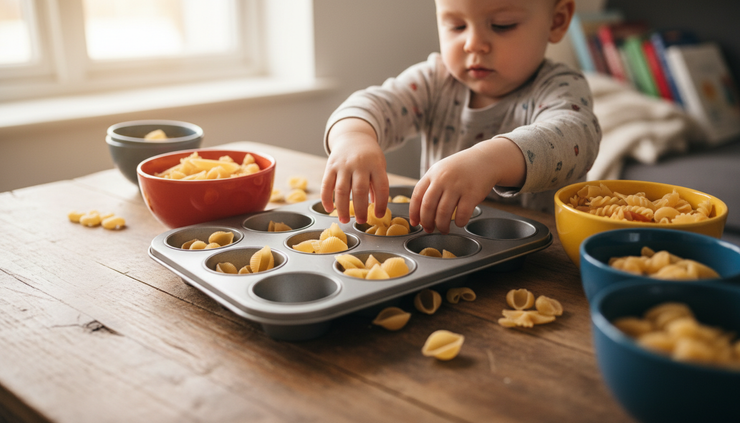
Give your toddler a muffin tin and a small bowl of safe objects, such as large pom-poms, chunky buttons, toy animals, or cereal pieces. Ask them to sort by color, size, or type. Count each group together.
You can say:
“Let’s put all the red ones here.”
“Which cup has more?”
“Can you give the bear two snacks?”
This builds early math skills without worksheets. It also supports fine motor control as your child picks up and places each item.
For a simple pouring station, place two plastic cups, a spoon, and a bowl of dry rice, oats, or large pasta on a tray. Stay nearby and expect some spills. Scooping and pouring help hand strength, coordination, and focus.
Make letters and shapes hands-on
Toddlers do not need to sit and trace letters for long periods. They can explore early literacy through movement and touch.
Try these simple ideas:
Build letters with play dough (homemade playdough or non-toxic https://amzn.to/3SxEPtx).
Make shapes with craft sticks.
Paint letters with water on a driveway or sidewalk.
Hide foam or magnetic (https://amzn.to/4wR1Jdx) letters in a bin of scarves or fabric scraps.
Match a letter to an object, such as `B` with a ball.
For toddlers, letter play should feel light. Sing the alphabet song, point out the first letter in their name, and notice letters on cereal boxes, books, and signs. Repeated exposure matters more than formal instruction.
Create a preschool basket for quick activities
A small basket of ready-to-use materials can save the day when energy is high and time is short. Include items that are open-ended and easy to rotate.
Good basket items include:
Crayons and blank paper
Stickers
Chunky puzzles
Lacing cards
Play dough
Animal figures
Measuring cups
Child-safe tongs
Board books
Keep only a few items in the basket at a time. Too many choices can overwhelm a toddler. Swap materials every few days to bring back interest.
Make learning playful with movement, stories, and pretend play
Toddlers are not built to stay still for long. Movement is part of learning. When you add action to preschool activities, your child can practice skills while using their whole body.
Add movement to early math and literacy
Turn counting into a movement game. Count jumps, claps, steps, or stuffed animals tossed into a laundry basket. Say the number out loud each time.
Try a shape hunt around the house. Ask your toddler to find something round, square, or triangle-shaped. A plate, book, window, or cracker can become part of the lesson.
For language practice, make silly sound games:
“Can you roar like a lion?”
“What starts with the same sound as mama?”
“Can you whisper the word banana?”
“Let’s say cat while we clap.”
Toddlers love repetition, so do not worry if a game feels too simple. Repeating the same playful patterns helps them understand and remember.
Use books as activity starters
Books can lead naturally into hands-on learning. After reading a book about animals, set up a pretend zoo. After a story about food, invite your toddler to “cook” with bowls and spoons. After a book about trucks, build roads with blocks or painter’s tape.
Reading does not need to be quiet the whole time. Let your toddler point, interrupt, ask questions, make sound effects, and act out parts of the story. That back-and-forth builds comprehension and vocabulary.
A few prompts can help:
“What do you think will happen next?”
“Can you find the dog?”
“How does that face look?”
“What would you do?”
Even if your child answers with one word, a gesture, or a sound, they are taking part.
Set up pretend play with a learning twist
Pretend play builds language, problem-solving, social awareness, and imagination. It also gives toddlers a safe way to practice real-life routines.
Simple pretend play setups include:
A grocery store with empty food boxes
A doctor visit with stuffed animals
A restaurant with plastic plates and menus made from paper
A post office with envelopes and stickers
A car wash for toy vehicles
Join the play for a few minutes, then step back when your toddler takes over. You can model language without directing every move. For example, “The bear says his tummy hurts. What should we do?” gives your child space to think and respond.
Take preschool outside whenever possible
Outdoor play gives toddlers room to move, observe, test ideas, and use their senses. A backyard, sidewalk, park, patio, or shared green space can become a rich learning area.
Nature encourages questions. Why is the leaf crunchy? Where did the worm go? What made that sound? These questions build curiosity and early science thinking.
Plan simple outdoor explorations
You do not need a full nature curriculum. A few repeatable activities can make outside time feel purposeful.
Try these outdoor learning ideas:
Collect leaves, rocks, or sticks and sort them by size.
Look for colors in nature.
Count birds, cars, clouds, or sidewalk cracks.
Make mud pies with old spoons and cups.
Draw shapes with sidewalk chalk.
Follow ant trails from a safe distance.
Splash in puddles with rain boots.
Bring a small bag with chalk, bubbles, a magnifying glass, and a snack. These simple supplies can stretch outdoor time and invite exploration.
Create outdoor routines
Link outdoor play to part of the daily rhythm. For example, go outside after snack each morning or before lunch each day. When outside time becomes expected, your toddler may transition into it more easily.
Try giving each outing a tiny focus:
Monday Look for colors.
Tuesday Count things that move.
Wednesday Listen for sounds.
Thursday Collect nature items.
Friday Draw with chalk.
This pattern keeps outdoor play fresh without making it complicated. It also helps you feel prepared.

Balance screen time with hands-on experiences
Screens can be part of modern family life, and many homes use them for learning, quiet time, or a needed reset. The challenge is to keep screen time from crowding out the hands-on play toddlers need.
A helpful approach is to decide when screens fit best, what your child will watch or use, and what happens afterward. Clear limits make screen time less confusing for toddlers.
Choose screen time with intention
Pick short, age-appropriate videos or apps that match your values. Co-view when you can. Sitting nearby allows you to talk about what your child sees and connect it to real life.
For example, if a video shows farm animals, you might ask:
“What sound did the cow make?”
“Can we find your toy cow?”
“Let’s stomp like the horse.”
This turns passive watching into a shared language activity.
Pair screens with real-world play
A simple rule can help: after a screen activity, offer a hands-on activity that connects to it.
If your toddler watches a song about colors, bring out crayons. If they watch a short clip about ocean animals, fill a bin with water and plastic sea creatures. If they watch a counting video, count snack pieces together.
This helps your child understand that screens are one way to learn, not the main way.
Use gentle boundaries
Toddlers often struggle when screens turn off. Predictable limits can reduce meltdowns.
Try these ideas:
Set a timer your child can hear.
Give a warning before the show ends.
Use the same closing phrase each time.
Offer a clear next activity.
Keep screens out of the main routine when possible, such as during meals or right before active play.
A phrase like “When the timer rings, the tablet rests, and we play with blocks” gives your child a clear path forward.
The goal is balance. Hands-on experiences, movement, conversation, and free play should carry most of the day. Screens can fill a small, planned role.
Keep engagement realistic and sustainable
Some days, your toddler will love every activity. Other days, they will dump the crayons, refuse the story, and wear a costume through lunch. That is normal. Homeschooling preschool is not a test of how many activities you complete.
Engagement often grows when toddlers have choices. Offer two options and let your child pick.
You might ask:
“Do you want play dough or crayons?”
“Should we read on the couch or the floor?”
“Do you want to count bears or cars?”
“Should we go outside before snack or after snack?”
Small choices help toddlers feel respected while still keeping the day on track.
It also helps to rotate active and quiet moments. Follow a seated activity with movement. Follow outdoor play with books. Follow messy sensory play with cleanup and snack. This rhythm lowers stress for both parent and child.
Do not forget independent play. Toddlers may need help getting started, but they also benefit from short periods of safe, self-directed play. Set out blocks, animals, or chunky puzzles. Stay nearby, but avoid jumping in too quickly. A few minutes of independent play can build focus and confidence.
When an activity falls flat, save it for another day. A toddler may ignore a puzzle on Monday and love it on Thursday. Interest changes quickly at this age.

A confident preschool day starts with simple habits
Keeping a toddler engaged during preschool at home does not require a packed schedule or perfect activities. A simple routine, playful learning, everyday materials, outdoor exploration, and thoughtful screen limits can create a day that feels steady and rich.
Start small. Choose one routine card to add, one basket of materials to prepare, or one outdoor activity to repeat this week. Watch what catches your child’s attention, then build from there.
Your toddler is learning when they pour, sort, climb, sing, pretend, ask, spill, try again, and laugh. With a little structure and plenty of play, home can be a warm and meaningful preschool space.
Comments