All Natural Chocolate Recipe Without Refined Sugar Smooth Non Melty and Easy to Customize
Homemade chocolate often has one of two problems. It tastes amazing but melts the second you touch it, or it sets firm but feels grainy from the sweetener. This recipe solves both with a cocoa butter base, finely powdered natural sweetener, and a simple tempering step that gives the chocolate a smoother texture and better snap.
This is an all natural chocolate recipe without refined sugar, made with pantry-friendly ingredients and plenty of room for add-ins. It is rich, glossy, and firm enough to sit out at normal room temperature without turning into a puddle.

The ingredients that make smoother homemade chocolate
The quality of your chocolate depends heavily on what goes into it. Since this recipe uses only a few ingredients, each one matters.
Ingredient | Amount | Why it matters |
Food-grade cocoa butter | 1 cup, chopped | Creates firmness, shine, and a true chocolate texture |
Unsweetened cocoa powder | 3/4 cup | Adds deep chocolate flavor |
Powdered maple sugar or powdered coconut sugar | 1/3 to 1/2 cup | Sweetens without refined sugar |
Vanilla powder or alcohol-free vanilla extract | 1/2 teaspoon | Rounds out the flavor |
Fine sea salt | 1/8 teaspoon | Makes the chocolate taste richer |
Sunflower lecithin, optional | 1/2 teaspoon | Helps with smoothness and blending |
Use powdered sweetener if possible. Granulated coconut sugar or maple sugar can make chocolate gritty. To fix that, blend the sweetener in a clean spice grinder or high-speed blender until it looks like powdered sugar. Let the dust settle before opening the lid.
Avoid watery sweeteners. Maple syrup, honey, and date syrup taste great, but they can cause melted chocolate to seize because they contain water. For smooth bars, dry sweeteners work better.
Step-by-step instructions for smooth non-melty chocolate
This recipe makes about 8 to 10 small pieces or one thin tray of break-apart chocolate.
Prepare your mold
Use a silicone chocolate mold, mini muffin pan, or parchment-lined loaf pan. Make sure it is completely dry. Even a few drops of water can make chocolate thick and clumpy.
Melt the cocoa butter gently
Place chopped cocoa butter in a heatproof bowl over a saucepan with 1 inch of barely simmering water. Stir until melted. Keep the bowl from touching the water.
Remove from heat once melted. The cocoa butter should look clear and golden.
Whisk in the cocoa powder
Add the cocoa powder a little at a time, whisking well after each addition. This keeps the mixture silky instead of lumpy.
Add the powdered sweetener, salt, and vanilla
Sift in the powdered maple sugar or coconut sugar. Add salt and vanilla. Whisk for 2 to 3 minutes. The longer whisking helps dissolve the fine particles into the fat.
Blend for extra smoothness
For the smoothest texture, use an immersion blender for 30 to 60 seconds. Keep the blade fully submerged so you do not add too much air.
Temper the chocolate for better firmness
Tempering helps chocolate set with a glossy finish and a firmer feel.
Warm the chocolate to about 115°F. Cool it to 81°F while stirring. Then gently rewarm it to 88°F to 90°F.
You can do this with a kitchen thermometer and patience. If the process feels fussy, skip it and refrigerate the chocolate instead. It will still taste good, but it may soften faster and look less shiny.
Pour and tap
Pour the chocolate into your mold. Tap the mold gently on the counter to release air bubbles.
Let it set
Let the chocolate set at cool room temperature if your kitchen is under 70°F. For a faster set, place it in the refrigerator for 20 to 30 minutes.

Why natural sweeteners are worth using
Natural sweeteners bring more than sweetness. Maple sugar has a warm caramel note. Coconut sugar tastes slightly toasty. Date sugar has a deeper fruit-like flavor, though it can be more textured.
They also tend to taste more complex than plain refined white sugar, which helps a small amount go further. That means the chocolate can stay bold and cocoa-forward instead of overly sweet.
This recipe is still a treat, but choosing less processed sweeteners gives you more flavor and better control over what goes into each bite.
For best results, choose:
Organic cocoa powder or cacao powder if you prefer a cleaner ingredient list (https://amzn.to/3SJgq4o)
Food-grade cocoa butter rather than cosmetic cocoa butter (https://amzn.to/4gQrZi2)
Fine sea salt so it blends evenly (https://amzn.to/4xGXVwE)
Fresh sweetener without clumps or moisture (https://amzn.to/4qSg7kc)
Pure vanilla powder when you want to avoid extra liquid (https://amzn.to/4qVk4Vb)
How to customize flavor and texture
Once you have the base recipe, it becomes easy to make it your own.
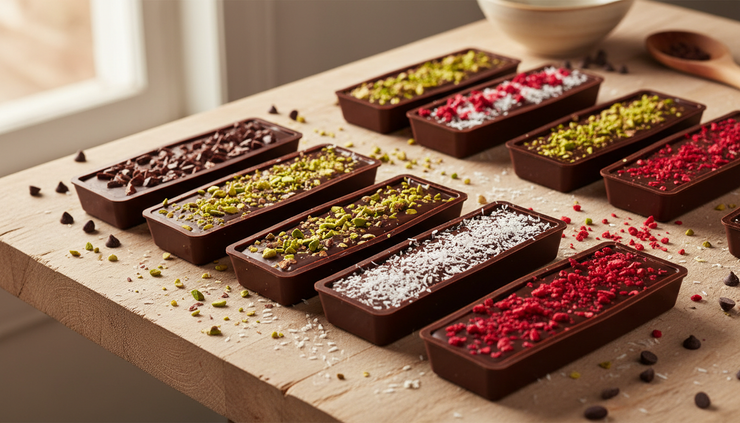
For crunch, sprinkle add-ins into the mold before pouring the chocolate. Try chopped almonds, toasted hazelnuts, cacao nibs, puffed quinoa, or shredded coconut.
For a creamier feel, replace 1 tablespoon of cocoa powder with 1 tablespoon of cashew butter or almond butter. Keep the amount small so the chocolate still sets firmly.
For flavor, stir in one of these before pouring:
Cinnamon and a tiny pinch of cayenne
Orange zest and chopped pistachios
Espresso powder and cacao nibs
Freeze-dried raspberries
Peppermint extract, used very lightly
If using extracts, choose alcohol-free when possible and start with just a few drops. Too much liquid can affect the texture.
How to keep homemade chocolate fresh and firm
Homemade chocolate holds best when protected from heat, light, and moisture. Store it in an airtight container with parchment between layers.
At normal room temperature, tempered chocolate can stay firm for several days if your kitchen is cool. If your home runs warm, keep it in the refrigerator.
For longer storage:
Refrigerate for up to 2 weeks
Freeze for up to 2 months
Let frozen chocolate thaw in the refrigerator before opening the container
Keep it away from strong-smelling foods
White streaks or dull spots are usually cocoa butter bloom. The chocolate is still safe to eat, but the texture may be less smooth. Better tempering and steady storage temperatures help prevent it.

A few final tips for better results
If the chocolate tastes too bitter, add 1 more tablespoon of powdered sweetener. If it tastes flat, add a small pinch of salt. If it feels grainy, powder the sweetener more finely next time and whisk longer.
The biggest tip is to avoid coconut oil as the main fat if you want a non-melty result. Coconut oil melts quickly in warm hands and warm rooms. Cocoa butter gives homemade chocolate its firm bite, smooth melt, and classic snap.
Make one simple batch first, then start playing with flavors. A little orange zest, toasted nuts, or flaky salt can turn a basic bar into something special, while still keeping the recipe natural, refined-sugar-free, and easy to enjoy.


Comments